When AI Becomes Part of the Attack Surface: Lessons from Recent Incidents

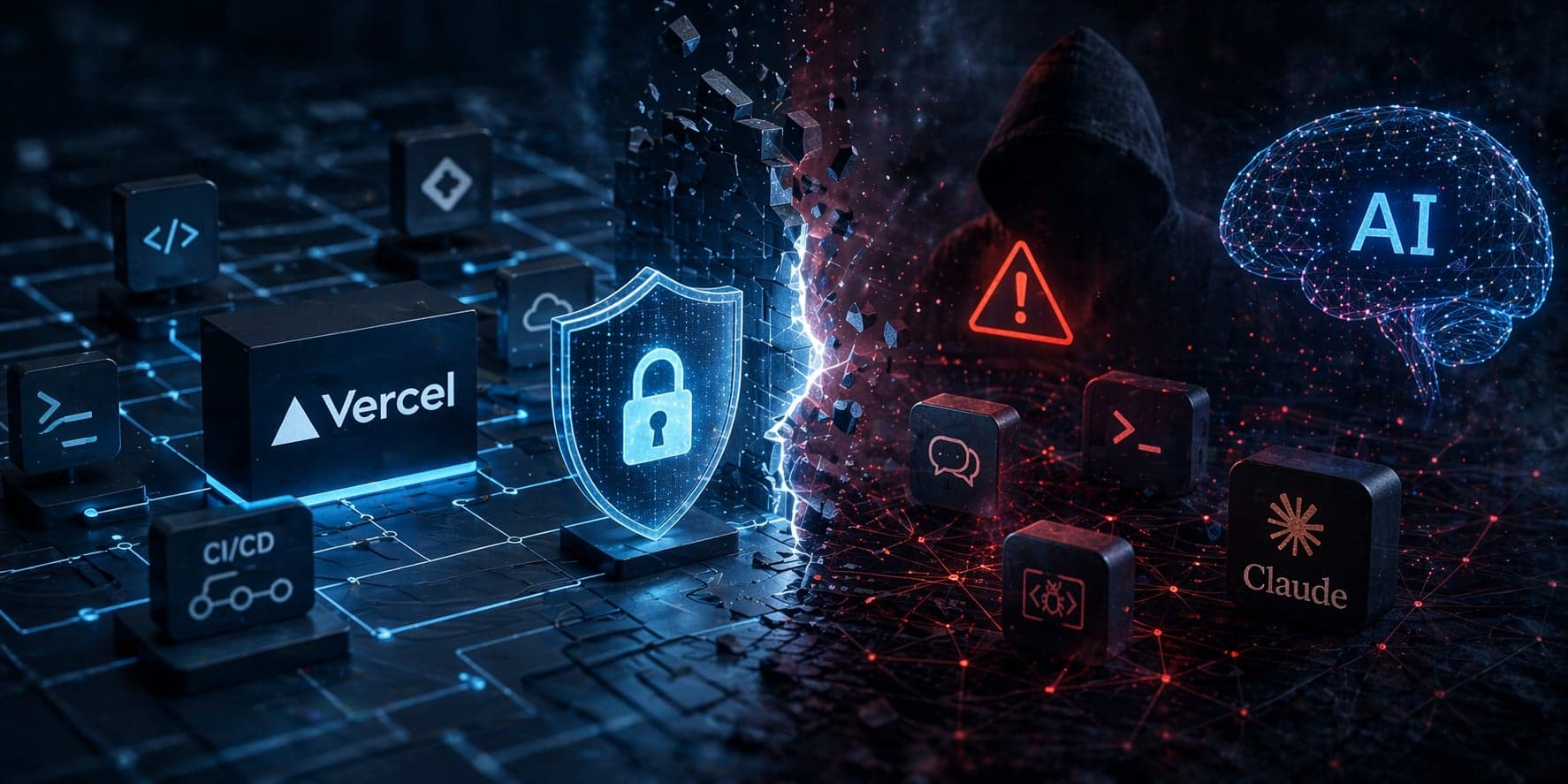
Over the past few days, something interesting — and slightly unsettling — happened.
A major platform used by thousands of developers was reportedly breached through a third-party AI-integrated tool.
At the same time, discussions around increasingly powerful AI systems — such as Claude and its emerging capabilities — are intensifying.
Not just in terms of productivity.
But in terms of control, behavior, and unintended consequences.
These are not isolated conversations.
They point to a bigger shift:
- AI is no longer just something we use.
- It is something we must design around.
🤖 AI Is Becoming Part of the System
Until recently, AI tools were external:
- copilots
- chat interfaces
- code assistants
Now, they are being integrated into:
- CI/CD pipelines
- developer tooling
- observability platforms
- security analysis
- infrastructure management
Which means:
👉 AI is no longer outside the system
👉 It is part of the system boundary
And anything inside the system boundary becomes part of the attack surface.
⚠️ A New Kind of Risk: Indirect Exposure
Traditional security models focus on:
- APIs
- authentication
- network access
- vulnerabilities in code
AI introduces a different category:
Indirect exposure.
Examples:
- AI tools with access to repositories
- integrations that can trigger actions
- systems that interpret and execute prompts
- tools that connect multiple services automatically
The risk is not always a direct exploit.
Sometimes it’s:
- misinterpretation
- unintended execution
- excessive permissions
- chaining of actions across systems
In other words:
👉 The system behaves correctly, but the outcome is still wrong.
🧠 The “Claude Mythos” Discussion
Recent discussions around Claude highlight something important.
Modern AI systems:
- can reason across steps
- can plan actions
- can interact with tools
- can generate complex outputs
This is powerful.
But it also introduces a subtle risk:
👉 The more capable the system, the harder it is to predict its behavior in complex environments.
This doesn’t make AI unsafe by default.
But it does mean that:
- assumptions must be revisited
- boundaries must be explicit
- control must be intentional
🧱 What This Means for Architects
This is where things become practical.
As architects, we are no longer designing systems that simply use AI.
We are designing systems that are partially driven by AI behavior.
This requires a shift in thinking.
🛡️ 1. Treat AI Integrations as Untrusted Components
Even if the provider is trusted, the behavior is not always deterministic.
Design as if:
- outputs can be unexpected
- actions can be misinterpreted
- responses can be inconsistent
Never assume correctness.
🔐 2. Minimize Permissions Aggressively
Many issues arise from over-permissioned integrations.
Apply:
- least privilege access
- scoped credentials
- restricted execution rights
Especially for:
- repository access
- deployment pipelines
- infrastructure changes
AI should not have more access than a junior engineer.
🔌 3. Introduce Control Points
Avoid fully autonomous execution chains.
Instead:
- require confirmations for critical actions
- introduce approval steps
- log every AI-triggered action
Think in terms of:
👉 “AI proposes, system controls”
🔍 4. Increase Observability for AI Actions
Traditional observability tracks:
- requests
- errors
- latency
Now we also need to track:
- AI decisions
- triggered workflows
- unexpected actions
- deviations from expected behavior
If AI becomes part of your system, it must also be observable.
🧨 5. Design for “Safe Failure”
What happens if an AI component behaves unexpectedly?
- Can the system stop safely?
- Can actions be rolled back?
- Is there a kill switch?
- Is the blast radius limited?
These questions are no longer optional.
🧭 The Bigger Picture
We are entering a phase where:
- systems are partially autonomous
- decisions are partially generated
- workflows are partially inferred
This doesn’t remove the need for architecture.
It increases it.
Because the system is no longer fully deterministic.
🧠 Final Thoughts
Incidents like the recent Vercel-related breach are not just security events.
They are signals.
Signals that our systems are evolving.
And with that evolution, the responsibility of architects changes.
We are no longer only designing:
- services
- APIs
- infrastructure
We are designing:
- boundaries
- control mechanisms
- trust levels
Because in a world where AI is part of the system:
👉 The biggest risk is not what the system can’t do.
👉 It’s what it might do unexpectedly.
📚 Related Reading
- Agentic AI: Hype, Reality, and What It Means for Software Architects
- Platform Engineering Is the New DevOps
- Retries, Timeouts, and Circuit Breakers
☕ Support the blog → Buy me a coffee
No spam. Just real-world software architecture insights.